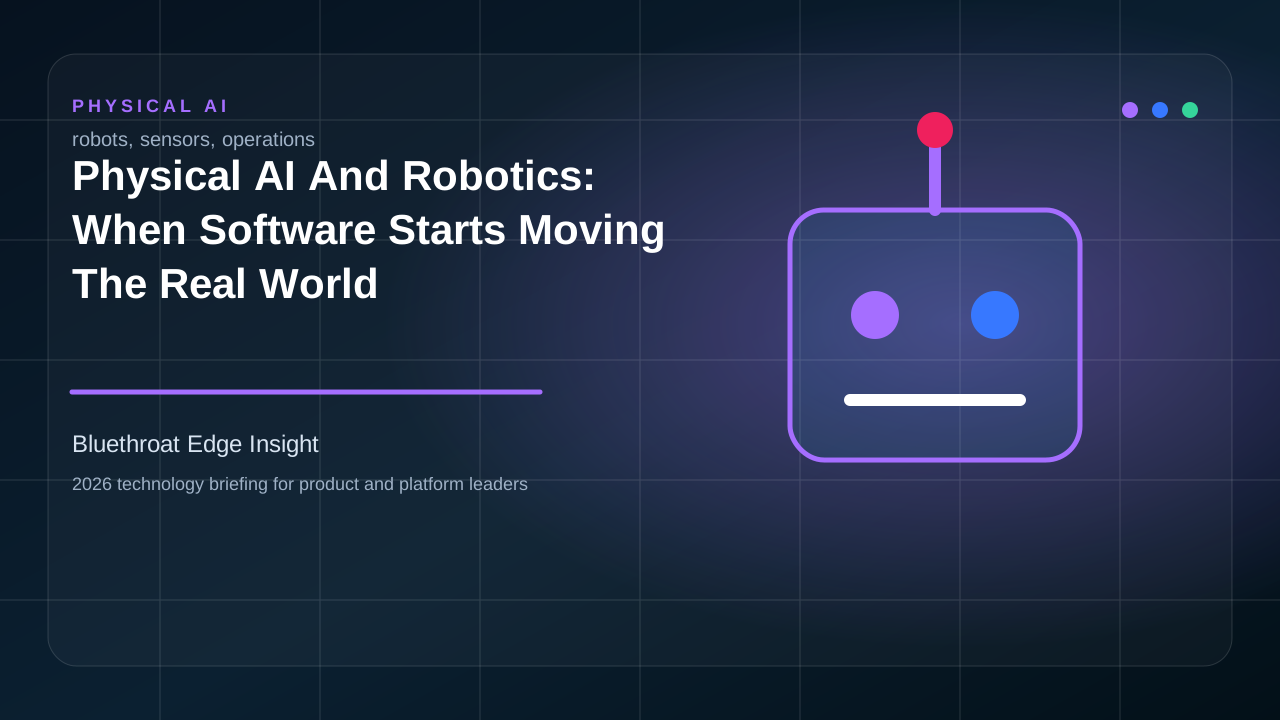
Physical AI And Robotics: When Software Starts Moving The Real World
 Bluethroat Edge
- September 21, 2026
- 6 min read
The next phase of AI is not only on screens. Robotics, drones, smart equipment, and AI-assisted operations are bringing software decisions into physical spaces.
Why this matters now
Physical AI is one of the clearest signs that AI is leaving the screen. Gartner, Deloitte, and McKinsey all point to robotics, smart equipment, and real-world AI systems as a major 2026 technology theme.
For businesses, this is not only about humanoid robots. It includes warehouse automation, inspection drones, smart manufacturing tools, vehicle diagnostics, field service equipment, connected sensors, and AI-assisted maintenance.
Why it is different from software AI
Physical AI needs to make decisions under real-world constraints: space, movement, safety, timing, weather, battery life, equipment failure, and human proximity. A bad recommendation in a dashboard can be corrected. A bad action in a workshop or warehouse may create safety, financial, or operational risk.
That means design has to include simulation, human override, operational boundaries, maintenance workflows, and detailed audit trails.
Where to start
The best starting point is not a robot for its own sake. It is an operational bottleneck that can be measured: inspection time, picking accuracy, machine downtime, technician workload, safety incidents, or inventory movement.
Organizations should begin with assistive systems, then expand toward automation when the workflow is understood and safe.
The signal for leaders is simple: treat this as an operating-system shift, not a feature trend.
- Bluethroat Edge
Practical Moves For Leadership Teams
- Start with measurable operational bottlenecks
- Design for human override
- Use sensors and logs for accountability
- Move from assistive AI to automation gradually
Sources And Signals
- Gartner Strategic Technology Trends 2026
- Deloitte Tech Trends 2026
- McKinsey Technology Trends Outlook 2026

Planning a product around this shift?
Bluethroat Edge can help shape the roadmap, user journeys, architecture, integrations, automation layer, and launch plan for your next platform.
Start A ConversationAbout Bluethroat Edge
Bluethroat Edge builds websites, CRM, ERP, fintech systems, marketplaces, mobile apps, dashboards, AI workflows, and custom business platforms.

Proof Board
Built by Bluethroat Edge
Recent Posts
Agentic AI Workflows: From Prompts To Delegated Work
AI Security Platforms: Protecting The New Machine Workforce
Post-Quantum Readiness: Why Crypto Inventory Starts Now
AI Infrastructure At The Edge: The New Cost, Cloud, And Energy Equation
Contact us
Have a product, platform, or article idea to discuss?
Send