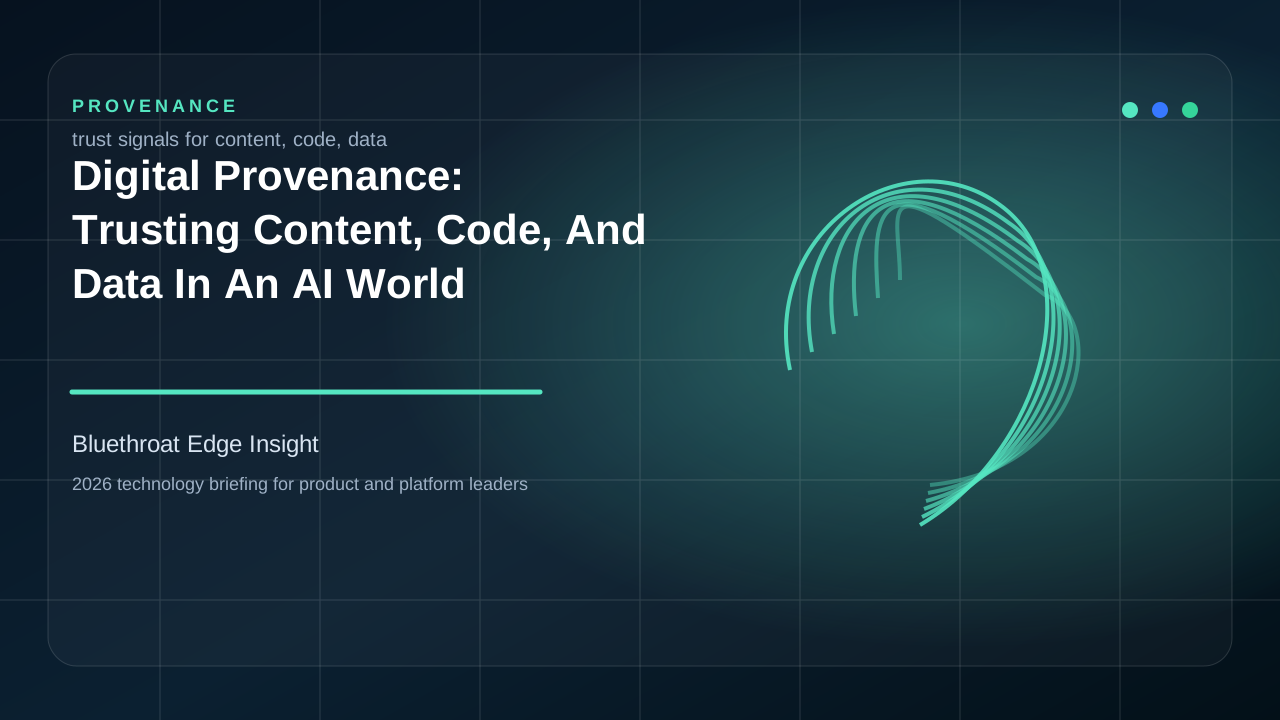
Digital Provenance: Trusting Content, Code, And Data In An AI World
 Bluethroat Edge
- September 21, 2026
- 6 min read
As AI-generated content, open-source code, model components, and synthetic media spread, provenance becomes a trust layer for products, platforms, and brands.
Why this matters now
AI makes it easier to create content, software, images, audio, reports, and synthetic evidence. That makes provenance more important: people need to know where something came from, how it changed, and whether it can be trusted.
Gartner has highlighted digital provenance as a 2026 technology trend. C2PA and content credentials are also becoming part of the broader trust conversation for media and AI-generated assets.
Where provenance shows up
For customer-facing brands, provenance can help identify authentic content. For software teams, it overlaps with supply-chain security, package integrity, model lineage, and audit trails. For regulated businesses, it supports evidence and compliance.
The pattern is simple: trust needs metadata. A file, model, dataset, invoice, or media asset should carry useful signals about origin, version, ownership, and transformation.
How platforms can respond
Product teams should add provenance to places where trust matters most: uploaded documents, generated images, signed records, financial workflows, customer communications, and code dependencies.
The goal is not to make every item complicated. The goal is to make important assets explainable and verifiable when decisions depend on them.
The signal for leaders is simple: treat this as an operating-system shift, not a feature trend.
- Bluethroat Edge
Practical Moves For Leadership Teams
- Track origin for critical content and data
- Preserve version and edit history
- Use standards where possible
- Show trust signals in the user interface
Sources And Signals

Planning a product around this shift?
Bluethroat Edge can help shape the roadmap, user journeys, architecture, integrations, automation layer, and launch plan for your next platform.
Start A ConversationAbout Bluethroat Edge
Bluethroat Edge builds websites, CRM, ERP, fintech systems, marketplaces, mobile apps, dashboards, AI workflows, and custom business platforms.
Proof Board
Built by Bluethroat Edge
Recent Posts
Agentic AI Workflows: From Prompts To Delegated Work
AI Security Platforms: Protecting The New Machine Workforce
Post-Quantum Readiness: Why Crypto Inventory Starts Now
AI Infrastructure At The Edge: The New Cost, Cloud, And Energy Equation
Contact us
Have a product, platform, or article idea to discuss?
Send